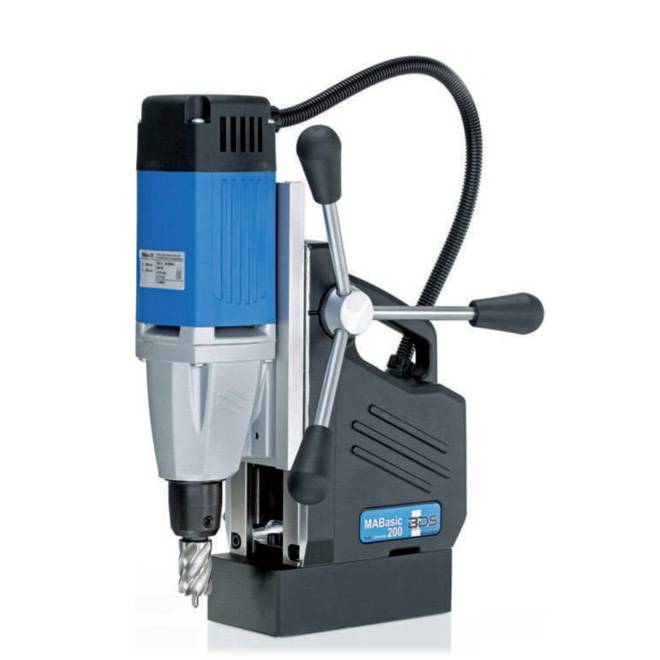
A magnetic drill is a portable drilling machine with an electromagnet or a permanent magnet base, used to make holes in metal.
A magnetic drill is a machine tool with a cutting tool part and an electromagnet, used to make holes in metal. Cutting tools called annular cutters are fitted to the magnetic drill; the annular cutter is hollow inside and has cutting edges on its face and on its teeth.
A magnetic drill is also called a magnetic core drilling machine, a magnetic drilling machine or a magnetic base drill.
A magnetic drill can also be used for operations such as tapping (thread cutting), twist drilling, reaming and countersinking. A portable magnetic drill makes holes in metal with the help of a special cutting tool called an annular cutter or a drill bit.
The difference between a conventional drilling machine and a magnetic core drilling machine:
The basic difference is that, unlike a conventional drilling machine, a magnetic core drilling machine is portable and flexible; it can be carried from one place to another and fixed horizontally, vertically, sideways and so on. Such flexibility of work cannot be achieved with any other drilling machine.
The other difference is that the core drilling machine cuts only the outer edge of the hole and not the whole surface, so it cuts very little material and is therefore faster and more economical. For that reason, under normal conditions, a magnetic drill is three or four times faster than conventional drilling machines.
The definition of the magnetic drill:
Portable magnetic drills are a new-technology machine and a faster-working alternative to older-technology metal hole-making machines such as the drill press, the geared drill, the radial drill press and milling.
A portable magnetic drill with an annular cutter (drill bit) makes holes above 12 mm in diameter. For holes below 12 mm in diameter, twist drill bits can be used. The annular cutters used for these machines are generally made of high speed steel (HSS) and tungsten carbide tips (TCT).
Depending on the nature of the material to be drilled and the hole diameter, the user can use HSS or TCT annular cutters.
With cutters, a magnetic drill gives an accuracy of 0.005 mm to 0.001 mm on materials such as steel, stainless steel and so on.
Portable magnetic drills come in different sizes, shapes and designs and have different electronics and equipment depending on the machine's purpose. By combining the drill's versatility with a powerful electromagnetic base, the drill is made to adhere to carbon steel (ferrous metal) surfaces. It can be positioned to drill horizontally, vertically or inverted (upside down).
The design of the magnetic drill:
A magnetic drill consists basically of four parts: the magnetic base, the drill stand, the motor and the spindle.
The magnetic base
At the base of the magnetic drill there is a powerful electromagnet to attach (adhere) the machine easily to the part to be drilled. When energised, the magnet stays fixed on the part to be drilled, holding the machine's base to the metal part so that the operator has a stable position against the workpiece. The electromagnet has an important place in the portable magnetic drill, because it keeps the machine stable, prevents it from moving during drilling and lets the machine be used at height, horizontally or vertically. In general a magnetic drill is used directly on ferrous metal, but with the help of a clamping device it can also be used on non-ferrous materials such as stainless steel.
The drill stand
The drill stand is the main body of the magnetic drill, on which the electrical switches of the motor and the magnet, the magnet indicator and the PCBs are mounted. The body of the magnetic drill holds the motor and the magnetic base together. The feed handle is also mounted on the body. The body of the magnetic drill lets the motor slide up and down for feed. The body of the magnetic drill is also used as a handle for lifting the machine and carrying it from one place to another. The material used for the body is generally cast iron.
The motor
The motor is the main component of the magnetic drill. It is a DC motor. The output power of the motor varies between 800 W and 2300 W depending on the power needed for drilling. A larger-diameter hole requires more motor power. The motor used for drilling and tapping machines has the option of running clockwise and anti-clockwise. In general the electronics used for speed and torque control are on the motor itself.
Chuck / industrial spindle
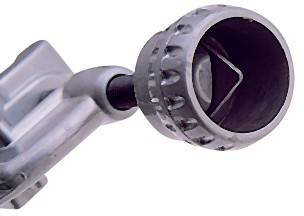
The chuck, also called the tool holder or drill sleeve, on the magnetic drill is mounted on the motor. It is a type of clamp used to fit annular cutters. There are two types of chuck for magnetic drills: the industrial spindle (manually tightened) and the quick-change chuck. The quick-change chuck is an easy and fast option for fitting annular cutters. There is no need to tighten screws/jaws by hand. Industrial spindles or chuck holders come in different spindle holder types such as Morse taper MT 2, MT 3 and MT 4. The chuck allows different annular cutter shanks to be fitted.
Using the magnetic drill:
The magnetic drill is made mainly for users working in construction, manufacturing and heavy machinery industries. These machines are ideal for use in the workshop as well as in the field. The magnetic drill is not made only for drilling with an annular cutter; it is also ideal for twist drilling, reaming, countersinking and tapping (thread cutting). Unless you are making blind holes or holes smaller than 12 mm in diameter, drilling with an annular cutter is extremely ideal, especially if you are not working under controlled workshop conditions.
There are various portable magnetic drills for making holes in the field, for repair or construction work on structural steel. These new, light machines can also be used in production and fabrication workshops. Usable in horizontal and vertical positions, the magnetic drill is available with pneumatic and hydraulic power options for use underwater and in hazardous areas.
The mechanism and operation of the magnetic drill:
A magnetic drill works like a normal conventional drilling machine, but its advantage is that the magnetic drill is taken to the part to be drilled. That advantage makes the magnetic drill portable and practical. The mechanism of the magnetic drill motor is the same as a DC motor with speed and torque control. Operating a magnetic drill is very simple and easy; the drill is used as described below,
- Hold the magnetic drill over the part to be drilled.
- Fit the required annular cutter(drill bit), with its ejector pin, into the chuck according to the diameter and depth of the hole to be made.
- Place and position the magnetic drill where the hole is to be made.
- Adjust it to establish the centre of the hole.
- Connect the magnetic drill to the power supply (230 V or 110 V depending on the model).
- Set the machine's gear speed according to the cutting speed.
- Switch on the magnet switch
- Start the motor.
- Open the lubrication plug.
- Feed the machine downwards for drilling. This makes a hole in the workpiece.
- Pass the whole cutter through the part to be drilled, then feed in reverse and bring the motor back to its first position.
- When a perfect hole has been made in the plate, a metal slug (piece) drops out.
For our detailed article on using the magnetic drill CLICK HERE A Professional Guide to Using Magnetic Drilling Machines
Types of magnetic drill:
There are various magnetic drills using different cutting tools such as cutters (annular cutters), twist drill bits, tapping tools, reamers and countersinks. Magnetic drills are versatile machines used to make holes up to 130 mm in diameter and M42 threads in steel. The most powerful core drill able to core-drill up to 130 mm in diameter, called the MAB 1300, is produced by our company. With the model name MAB 1300V, this machine, with an automatic feed option, is the world's most powerful magnetic drilling machine.
There are different types and models of magnetic drill according to use, drive, size, feed, operation and so on. Some of the most requested models are given below.
Lightweight magnetic drill:
Lightweight magnetic drills are used where the machine has to be carried — electricity pylons, base stations, television towers, bridges — and in positions where weight is very important. The lightweight magnetic drill models are called MAB 100K.
Magnetic drills with automatic and semi-automatic feed:
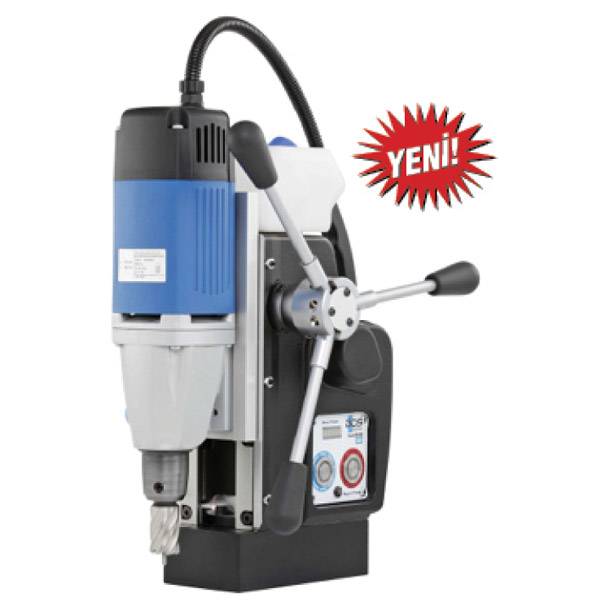
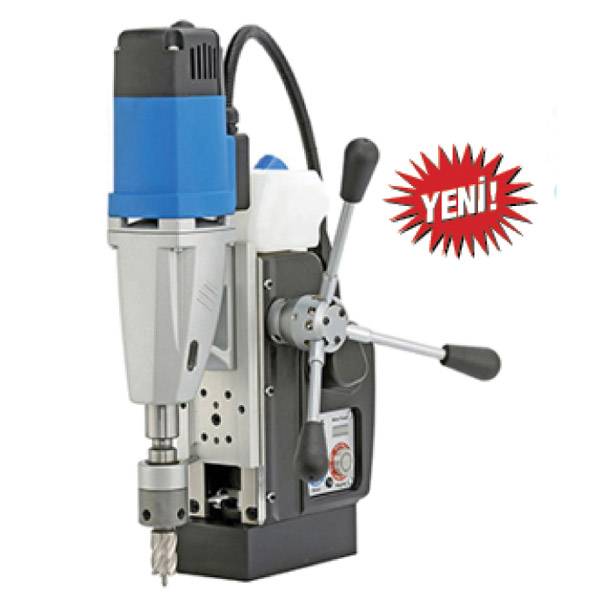
Magnetic drills with fully and semi-automatic feed are very widely used these days. These machines help save time and energy and provide more output. Our fully automatic drilling machine models are AutoMAB 350 and AutoMAB 450, and our variable-speed magnetic drilling machines are MAB 825V/MAB 845V and MAB 1300V.
Pneumatic magnetic drill:
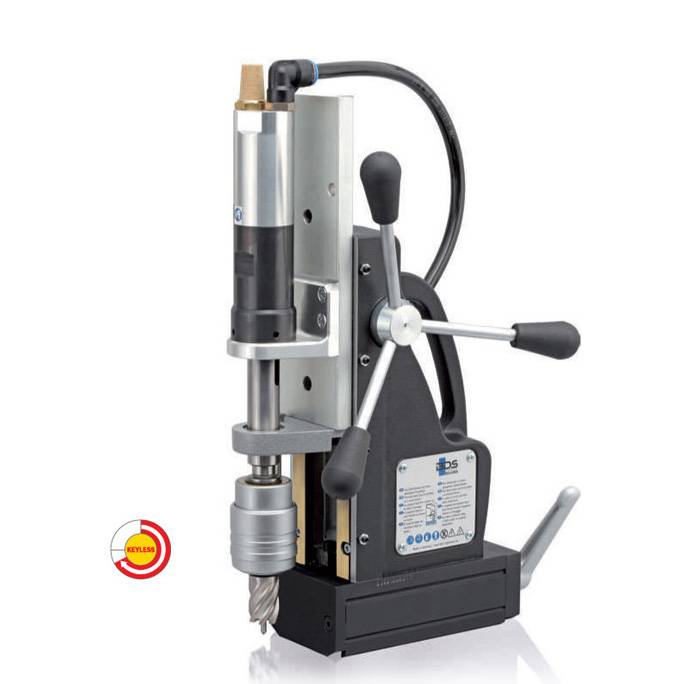
Pneumatic core drilling machines are used particularly where there is a fire risk from electricity. This model is used mainly for safety purposes. The motor is driven pneumatically and the magnet is a permanent magnet rather than an electromagnet. Our pneumatic magnetic drill model is AirMAB 5000.
Rail core drilling machines:
Specially produced, these rail core drilling machines are the best option for making holes in railway track. These machines have special clamps instead of a magnet to fix them onto the rail. The rail drilling models are available as the electrically driven RailMAB 915 and the petrol-driven RailMAB 965.
Horizontal magnetic drill:
Bevel-geared horizontal magnetic drills are used particularly in the most restricted drilling conditions. The model of our horizontal compact magnetic drilling machine is MAB 155.
Magnetic drilling and milling machine:
The innovative magnetic base drilling and milling machine is called a portable milling machine. This machine is used for light milling, drilling, countersinking and reaming. It has a cross-table base. The model of this portable milling machine is MAB 825 KTS.
Applications of the magnetic drill:
Portable drilling machines or magnetic drills are used in many fields,
- Bridge construction
- Pre-Engineered Buildings (PEB)
- Heavy engineering companies
- Manufacturing sectors
- The fabrication sector
- Boiler manufacture
- Rail drilling
- Rolling stock manufacture
- Wind turbine manufacture
- The automotive sectors
- Tower and pylon construction
The advantages of the magnetic drill over the conventional drill:
Bringing the machine to the part to be worked on!
There are various portable magnetic drills for making holes in the field, for repair or construction work on structural steel. These new, light machines can also be used in production and fabrication workshops. Usable in horizontal and vertical positions, a magnetic drill is available with pneumatic and hydraulic power options for use underwater and in hazardous areas.
A magnetic drill is 2 to 4 times faster than a conventional drill. Because twist drill bits cut at a single point, making a hole requires a machine with higher horsepower; that machine is generally a large, bench-mounted machine, conventionally configured vertically and less portable. If the hole is larger, more time and horsepower are needed to drill the material. But thanks to the multi-point cutting of annular cutters (drill bits), core drilling with a magnetic drill cuts at a higher feed rate with lower horsepower consumption, so they work on smaller machines and drill 2 to 4 times faster.
Another benefit of core drilling is cleaning up and reuse after the job is finished. During twist drilling many sharp chips mix into the oil. Separating the two for environmental and recycling purposes is difficult and requires more time and cost. The scrap from magnetic drill cutters consists of a small amount of waste and a solid slug. The solid piece of metal is easier to separate and gives more profit when the scrap is sold on.
- Making holes two to four times faster
- Saves time
- Saves money because the cutters last longer
- Less material waste during drilling
- Portable machines
- Taking the machines to the workpiece
- Horizontal, vertical, diagonal, right-to-left drilling
- Less noise
- Environmentally friendly
- Easy to carry
- Economical
- Powerful
- Less maintenance