A Comprehensive Magnetic Drill Buying Guide for Professionals (Updated 2025)
If you work in heavy industry, steel construction, shipbuilding or large-scale assembly, you know how difficult it can be to make precise, powerful holes in large fixed metal parts. In those moments, when conventional drills fall short, when freedom of movement is limited and safety comes first, the magnetic drill arrives on the scene almost as a rescuer. So what should you watch for when making this critical investment, which will directly affect your project's efficiency, safety and quality?
This comprehensive magnetic drill buying guide has been prepared, with up-to-date information for 2025, to explain step by step how to choose the right machine for your needs. We will look in depth not only at technical specifications but also at the factors behind magnetic drill prices, at choosing the right magnetic drill cutter, and at why brands such as BDS magnetic drills are preferred by professionals. By the time you finish reading this guide you will have all the information you need to make an informed decision.
What Is a Magnetic Drill and How Does It Differ from Conventional Drills?
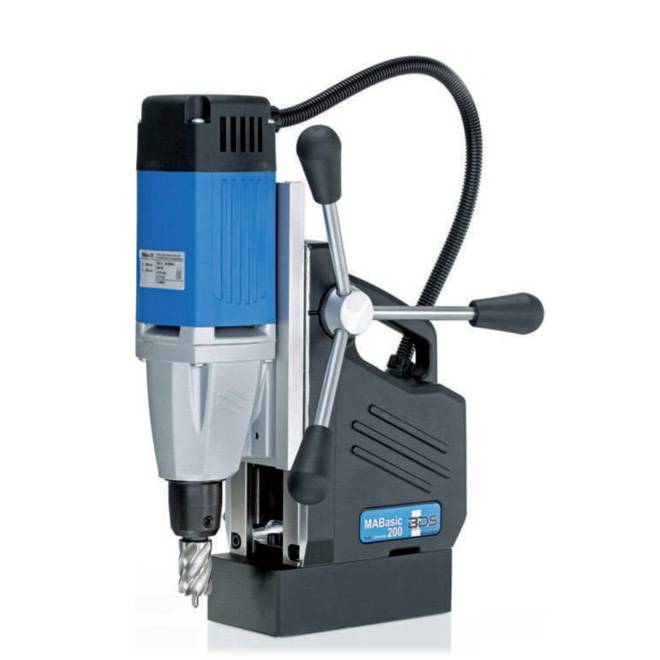
At its most basic, a magnetic drill is a portable drilling machine with a powerful electromagnet in its base, which lets it grip firmly onto ferrous (ferromagnetic) metal surfaces vertically or horizontally. This simple but ingenious design gives it unique advantages that conventional bench or hand drills can never offer.
The basic working principle: the combination of magnet and motor power
When the electromagnet in the base of the machine is activated, it locks onto the metal surface it is working on with a force of thousands of Newtons (10,000 N, for example, roughly equivalent to a tonne in weight). This keeps the drill fixed during drilling, without the slightest slip or vibration. The powerful motor mounted on this stable base drills the metal precisely by removing chips, using a magnetic drill cutter (usually carbide or HSS annular cutters).
What are its advantages over conventional drills?
- Portability: instead of carrying a huge steel column or chassis to a bench drill, the magnetic drill goes straight to the workpiece. That changes the rules of the game on sites, in shipyards and in large assembly areas.
- Superior stability and precision: thanks to its ability to lock onto the surface, it offers a precision and squareness impossible to achieve with hand drills. That is vital, especially at critical connection points and bolt holes.
- High power and efficiency: it makes large-diameter holes (50 mm and above, for example) far faster and with less effort than conventional methods. Because annular cutters cut only the metal around the hole, less power is needed and the operation is faster.
- Flexible working positions: it offers the ability to work safely in horizontal, vertical and even overhead positions. That makes it possible to drill holes in hard-to-reach areas.
The Right Choice: 7 Critical Factors to Watch for When Buying a Magnetic Drill
There are dozens of models on the market with different features and prices. Choosing the right machine for your project's success comes from understanding these seven critical factors.
1. Motor power (watts) and torque: the heart of the job
Motor power is generally expressed in watts (W) and shows how hard the machine can be pushed. But the wattage figure alone can be misleading. What really matters is how effectively the motor turns that power into rotational force (torque).
- Low power (800 W - 1200 W): suitable for thinner metals and small-diameter holes. Generally lighter and more compact.
- Medium power (1200 W - 1800 W): the ideal range for general steel construction work and medium-thickness materials.
- High power (1800 W+): necessary for heavy-duty applications such as making large-diameter holes in very thick material (50 mm+), tapping or rail drilling.
Professional advice: when working on hard metals or at large diameters, a machine with high torque will keep drilling without fainting even at low speed. So watch not only the wattage but also the machine's torque capacity.
2. Magnetic adhesion force (N): the foundation of safety and precision
The magnet's adhesion force is measured in Newtons (N) and determines how safe the machine is. Insufficient adhesion force can cause the drill to shift during drilling, break the cutter and lead to serious accidents.
- Minimum requirement: an adhesion force of at least 3-4 times the machine's weight is generally accepted as the safety standard.
- The effect of surface thickness: for the magnet to perform fully, the metal it works on must be of a certain thickness (generally at least 10-12 mm). On thinner metal the adhesion force will drop.
- Choosing by application: in vertical or overhead work it is essential to prefer models with a higher adhesion force.
3. Drilling capacity (diameter and depth): the limits of your project
Every machine has a certain maximum drilling diameter and depth. That capacity is generally stated for two different cutter types:
- Annular cutter (core drill): these cutters are more efficient because they cut only around the hole, and they allow larger diameters (from 12 mm to 130 mm, for example).
- Twist drill: these are conventional drill bits and are used for smaller-diameter holes. They generally require a separate chuck adapter.
Assess your needs: what is the largest diameter and depth of hole you generally make? Thinking of your potential future work as well, it may be wise to choose a model with somewhat higher capacity. Also, if you will carry out additional operations such as tapping or countersinking, make sure the machine supports those features.
4. Speed (RPM) and adjustability: working to suit the material
Different materials and cutters of different diameters require different speeds for the most efficient cut.
- High speed (RPM): ideal for small-diameter cutters and softer metals.
- Low speed (RPM): essential for large-diameter cutters and hard, tough materials such as stainless steel. Trying to drill hard metal at high speed causes the cutter to overheat and go blunt.
The best choice: a model with variable speed adjustment or more than one gear gives you maximum flexibility and extends the life of your cutters.
5. Weight, size and ergonomics: your best friend on site
If you are going to carry the machine all day and use it in different positions, weight and ergonomics are critical. More powerful machines will naturally be heavier. A balance has to be struck here. Do you work in tight spaces? Do the machine's overall height and dimensions matter to you? Details such as the position of the carrying handle and the accessibility of the switches make a big difference in long periods of use.
6. Cutter compatibility and chuck type (Weldon, universal)
Magnetic drills generally use cutters with a Weldon shank. This system fixes the cutter with screws on its two flats and prevents slipping during torque transmission. It is the most widespread system on the market. Some machines have universal chucks that accept both Weldon and other shank types. Check the chuck type bearing in mind your existing stock of cutters and your future needs.
7. Extra features and cooling systems: performance and long life
The details that separate professional machines from the rest are generally the extra features:
- Internal cooling system: systems that spray cutting fluid from the centre of the cutter cool the cutter during drilling, clear the chips and both extend the cutter's life and give a cleaner hole surface. This is an indispensable feature, especially for deep holes.
- Torque control and electronic protection: safety systems that cut the power to the motor if the cutter jams, protecting both the operator and the machine.
- Quick-change cutter systems: mechanisms that let you change the cutter quickly without tools.
Why Do Professionals Prefer BDS Magnetic Drills?
Having examined the 7 critical factors above, it becomes clearer why some brands stand out. The German BDS Maschinen GmbH is one of the world leaders in magnetic drill technology, and there are concrete reasons why it is the professionals' choice:
- Superior German engineering and material quality: BDS magnetic drills are made with high-quality components able to withstand the harshest site conditions. Every part, from the motor windings to the gearbox, is designed for long life and maximum performance.
- A perfect balance of power and precision: BDS motors combine high torque production with a stable speed and make precise holes without strain even in the hardest steels. Their powerful magnets offer unshakeable safety even in the most difficult positions.
- A wide model range: a solution for every need: from the very compact and light MABasic series to the AutoMAB series with automatic feed and tapping capability, there is a BDS model designed specially for every kind of application and budget.
- Innovative technologies: technologies such as integrated cooling systems, wear-controlled carbon brushes and full-wave control electronics make BDS machines more efficient, safer and longer-lived.
- After-sales support and service assurance: when you buy a professional machine, the service network behind it is at least as important as the machine itself. With its widespread service network and spare part availability, BDS makes sure your investment is protected.
Magnetic Drill Prices: What Determines the Value of Your Investment?
Magnetic drill prices vary over a wide range, from hobby machines costing a few hundred dollars to industrial monsters costing thousands. The main elements that determine the price are:
- Brand and place of manufacture: long-established German or European brands such as BDS are generally more expensive, but they more than repay that difference in quality, durability and performance.
- Motor power and capacity: as power and drilling diameter increase, the price naturally increases too.
- Extra features: features such as variable speed adjustment, tapping function and a swivel base affect the cost.
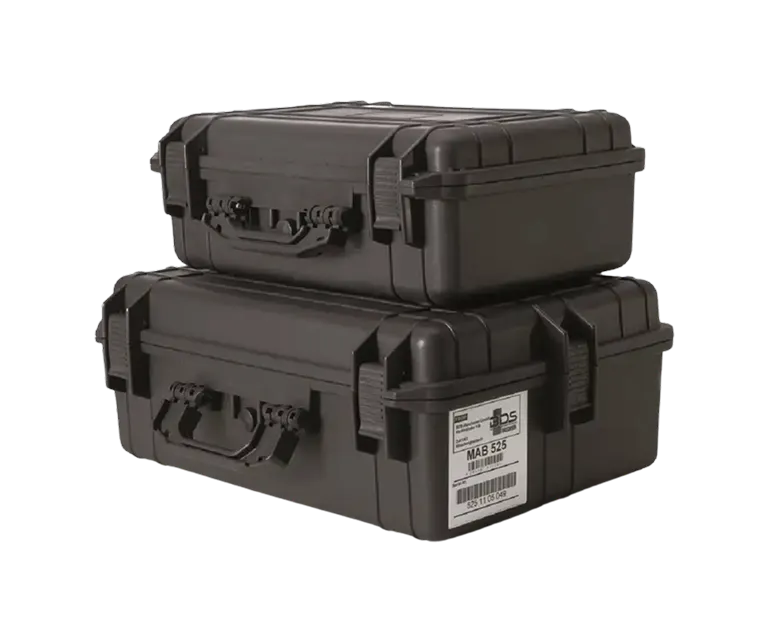
- Accessories: the quality and variety of standard accessories such as the carrying case, coolant tank and safety chain are included in the price.
Remember, a magnetic drill is not an expense but an investment. A cheap machine can cost you far more through frequent breakdowns, poor performance and the risk of accidents. It is best to decide by thinking of the total cost of ownership (initial purchase + maintenance + breakdown costs).
Frequently Asked Questions (FAQ)
Q: Why are annular (core drill) cutters preferred as magnetic drill cutters?
A: Because annular cutters cut only around the hole and remove the piece of metal in the middle (the slug) in one piece. That produces less swarf, requires less power, speeds up the operation by 3-4 times and allows holes of much larger diameter than conventional twist drills.
Q: Is it compulsory to use cutting oil or coolant when using a magnetic drill?
A: Absolutely yes. Coolant reduces friction and prevents the cutter from overheating and going blunt. That both extends the cutter's life by up to 10 times and lets you obtain a smoother, more precise hole surface.
Q: How should I maintain a magnetic drill?
A: Clean the machine after every use, particularly removing metal chips from the magnetic base and the slide system. Check the carbon brushes regularly and replace them when necessary. Keep the coolant tank clean. Having the machine serviced professionally at the intervals stated by the manufacturer will considerably extend its life.
Conclusion: The Right Decision for Your Project
Choosing the right magnetic drill is one of the most important investments you will make for your project's efficiency, its quality and, most importantly, workplace safety. By carefully assessing the critical factors covered in this guide — motor power, magnetic force, drilling capacity, speed adjustment — you can determine the machine best suited to your needs.
Where quality, durability and performance are concerned, turning to proven brands such as the BDS magnetic drill series will save you both time and money over the long term. Remember, the best machine is the one that can handle without trouble not only today's work but also your potential future projects.
Contact us now to choose the right BDS magnetic drill model for your project or to get free advice from our expert team. Strengthen your investment with knowledge and take your work to the next level.