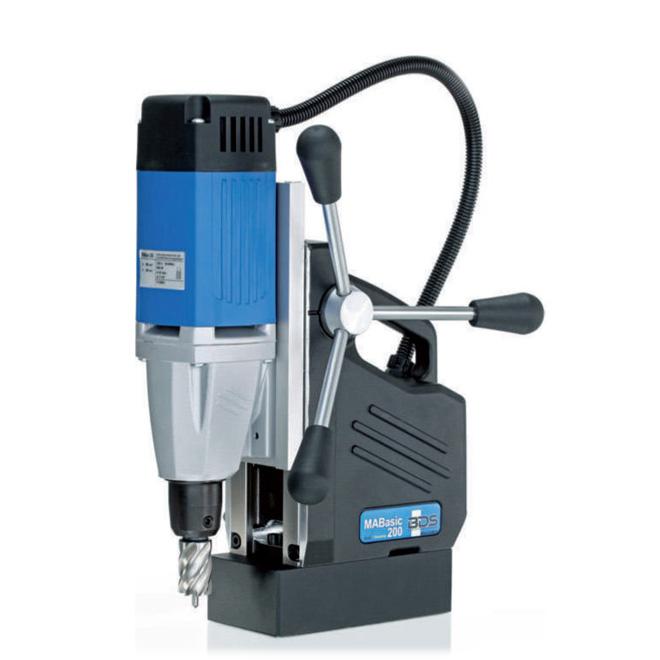
Magnetic Drills (MAB): Features, Prices and Frequently Asked Questions
Magnetic drills, also known as mag drills, are powerful and efficient tools used in the metalworking, construction and manufacturing industries. These drills use the power of magnets to hold onto a metal surface and allow precise drilling without the need for clamps or other fixing mechanisms.
One of the leading brands in the magnetic drill industry is MAB, which produces durable, reliable and efficient high-quality drills. In this article we will cover magnetic drills, the MAB brand and magnetic drill prices.
What are magnetic drills?
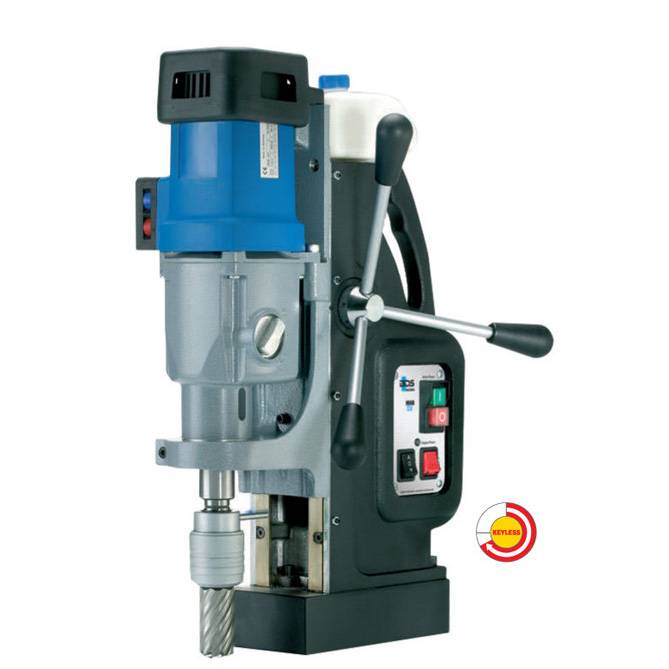
Magnetic drills use powerful magnets to hold onto a metal surface and provide precise drilling. These drills are generally used in the metalworking, construction and manufacturing industries. The magnetic base of the drill keeps it securely attached to the metal surface, allowing accurate and efficient drilling without the need for clamps or other fixing mechanisms.
Magnetic drills come in different sizes and shapes and can be used with a variety of drill bits. Some magnetic drills can even be used with annular cutters, special bits designed to remove a circular piece of material from a metal surface.
Magnetic drills run on electricity and can be corded or cordless. Corded drills typically offer more power and consistent performance, while cordless drills offer greater mobility and convenience.
MAB magnetic drills
MAB is a leading brand known in the magnetic drill industry for producing durable, reliable and efficient high-quality drills. MAB drills are made of high-quality materials and are designed to withstand the demands of industrial use.
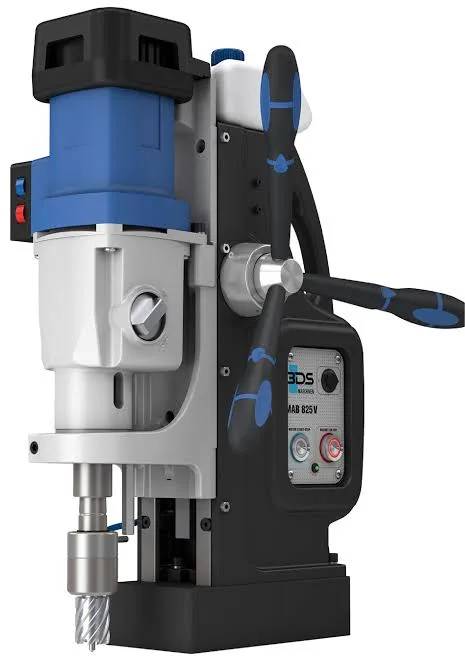
MAB offers a wide range of magnetic drills, including corded and cordless models as well as models designed for special applications. For example, the MAB 825 V is a corded drill designed for heavy-duty drilling work, while the MABasic 200 is a drill designed for smaller jobs.-
MAB drills are also known for innovative features such as the magnet indicator system, which warns the user if the drill is not securely fixed to the metal surface. This feature helps ensure that the drilling operation is safe and accurate.
WHAT SHOULD YOU LOOK FOR WHEN CHOOSING A MAGNETIC DRILL?
When it comes to choosing a magnetic drill there are several factors to consider, including power, durability, ease of use and safety features. You will also want to look for a brand with a good reputation for quality and reliability as well as excellent customer support.
BDS Maschinen is a recognised manufacturer of high-quality magnetic drills that has been operating for more than 30 years. They offer a range of models designed to meet the needs of various industries and applications, from small hobby shops to large-scale industrial operations.
BDS Maschinen magnetic drills are known for their powerful motors, advanced safety features and durable construction. They also offer a number of innovative features, such as the patented QuickIN system, which allows fast and easy tool changes without the need for additional tools.
In addition to its high-quality products, BDS Maschinen is also committed to providing excellent customer support. They offer comprehensive training and support for their products as well as a network of authorised dealers and service centres, so that customers can get the help they need when they need it.
In conclusion, the best magnetic drill for your needs will depend on your specific requirements, your budget and your application. It is important to do your research, compare features and prices and read other customers' reviews in order to find the best option for you.
Magnetic drill prices
Magnetic drill prices can vary according to the brand, the size and the features of the drill. MAB drills are generally more expensive than other brands, but they are also known for their high quality and durability.
The price of corded magnetic drills can range from 500 to 2,000 US dollars, while cordless drills can range from 700 to 3,000 US dollars. The price of a magnetic drill can also vary depending on its size and power, with larger and more powerful drills generally being more expensive.
When considering the price of a magnetic drill, it is important also to take into account the cost of accessories such as drill bits and annular cutters. These accessories can add to the total cost of the drill, but they are necessary for efficient and accurate drilling.
FREQUENTLY ASKED QUESTIONS ABOUT MAGNETIC DRILLS (MAB)
What is a magnetic drill?
A magnetic drill is a drilling tool that uses the power of magnets to hold onto a metal surface, allowing precise drilling without the need for clamps or other fixing mechanisms.
How does a magnetic drill work?
A magnetic drill works by using powerful magnets to hold onto a metal surface, keeping the drill securely in place during drilling.
What are the benefits of using a magnetic drill?
The advantages of using a magnetic drill include precise and efficient drilling, increased safety and shorter set-up time compared with traditional drilling methods.
What are the different types of magnetic drill?
There are two main types of magnetic drill: corded and cordless. Corded drills offer more power and consistent performance, while cordless drills offer greater mobility and convenience.
What is the difference between a magnetic drill and a standard drill?
A magnetic drill uses the power of magnets to hold onto a metal surface, while a standard drill requires clamps or other fixing mechanisms to hold it in place.
What is the maximum drilling capacity of a magnetic drill?
The maximum drilling capacity of a magnetic drill varies depending on the size and power of the drill. BDS Maschinen offers magnetic drills with drilling capacities ranging from 12 mm to 100 mm.
Which materials can be drilled with a magnetic drill?
Magnetic drills can be used to drill a wide range of materials, including steel, aluminium and other metals.
Can a magnetic drill be used on non-metallic surfaces?
No, magnetic drills are designed for use only on metal surfaces.
Can a magnetic drill be used in wet conditions?
Yes, some magnetic drills are designed for use in wet conditions and have water-resistant motors and other components.
What safety precautions should be taken when using a magnetic drill?
When using a magnetic drill it is important to wear appropriate safety equipment, such as eye protection and hearing protection, and to follow all the manufacturer's instructions and guidelines.
How do you maintain a magnetic drill?
To maintain a magnetic drill it is important to clean and lubricate the drill regularly and to replace worn or damaged parts as required.
What is the warranty on a magnetic drill?
The warranty on a magnetic drill varies by manufacturer and model. BDS Maschinen gives a 1-year warranty on its magnetic drills.
Can a magnetic drill be used for horizontal drilling?
Yes, some magnetic drills are designed for use in horizontal drilling applications.
Can a magnetic drill be used for angled drilling?
Yes, some magnetic drills are designed for use in angled drilling applications.
What is the weight of a magnetic drill?
The weight of a magnetic drill varies by model and specification. BDS Maschinen offers magnetic drills weighing between 9.5 kg and 38 kg.
What is the power supply of a magnetic drill?
Magnetic drills typically run on electricity and can be corded or cordless.
Can a magnetic drill be used in confined spaces?
Yes, some magnetic drills are designed for use in tight spaces and have compact designs and low profiles.
What is the spindle speed of a magnetic drill?
The spindle speed of a magnetic drill varies by model and specification. BDS Maschinen offers magnetic drills with spindle speeds ranging from 100 RPM to 900 RPM.
What is the cutting depth of a magnetic drill?
The cutting depth of a magnetic drill varies by model and specification. BDS Maschinen offers magnetic drills with cutting depths ranging from 50 mm to 75 mm.
Can a magnetic drill be used for countersinking?
Yes, some magnetic drills are designed for use in countersinking applications.
What is the minimum material thickness that can be drilled with a magnetic drill?
The minimum material thickness that can be drilled with a magnetic drill depends on the size and power of the drill as well as on the type of material being drilled. In general, magnetic drills can be used to drill material as thin as 3 mm.
Can a magnetic drill be used for tapping?
Yes, some magnetic drills are designed for use in tapping threads and have a reversible motor and a tapping attachment.
What is the maximum hole depth that can be achieved with a magnetic drill?
The maximum hole depth that can be achieved with a magnetic drill varies by model and specification. BDS Maschinen offers magnetic drills with maximum hole depths ranging from 50 mm to 180 mm.
Can a magnetic drill be used to drill on an uneven surface?
Yes, some magnetic drills are designed for use on uneven surfaces and include adjustable base plates and magnet force settings.
What is the average life of a magnetic drill?
The average life of a magnetic drill depends on the quality of the drill and how well it is maintained. With proper maintenance a high-quality magnetic drill can last for many years
What is the accuracy of a magnetic drill?
The accuracy of a magnetic drill depends on the quality of the drill and how well it is calibrated. BDS Maschinen offers magnetic drills with accuracy down to 0.02 mm.
Can a magnetic drill be used with drill bits from other manufacturers?
Yes, magnetic drills can typically be used with other manufacturers' drill bits as long as the bit is compatible with the magnetic drill's chuck or adapter.
How long does it take to change the drill bit on a magnetic drill?
The time it takes to change the bit on a magnetic drill varies by model and specification. Some magnetic drills have quick-change chucks that allow fast and easy bit changes.
What is the difference between a single-speed and a variable-speed magnetic drill?
A single-speed magnetic drill has a fixed spindle speed, while a variable-speed magnetic drill allows the user to adjust the spindle speed to suit the requirements of the drilling operation.
Can a magnetic drill be used for reaming?
Yes, some magnetic drills are designed for use in reaming applications and have a reaming attachment.
What is the noise level of a magnetic drill?
The noise level of a magnetic drill varies by model and specification. BDS Maschinen offers magnetic drills with noise levels as low as 65 dB.
Can a magnetic drill be used with annular cutters?
Yes, magnetic drills are designed for use with annular cutters, which provide faster and more efficient drilling than standard drill bits.
What is the cost of a magnetic drill?
The cost of a magnetic drill varies by model and specification. BDS Maschinen offers magnetic drills priced from a few hundred to a few thousand dollars.
How long does it take to set up a magnetic drill?
The set-up time of a magnetic drill varies by model and specification. Some magnetic drills have quick-release chucks and adjustable base plates that make set-up fast and easy.
Can a magnetic drill be used to drill in overhead positions?
Yes, some magnetic drills are designed for use in overhead drilling applications and have a light, compact design.
What is the difference between a permanent magnet and an electromagnet on a magnetic drill?
A permanent magnet uses a fixed magnetic field to hold the drill in place, while an electromagnet uses an electric current to create a magnetic field that holds the drill in place.
Can a magnetic drill be used to drill holes in corners?
Yes