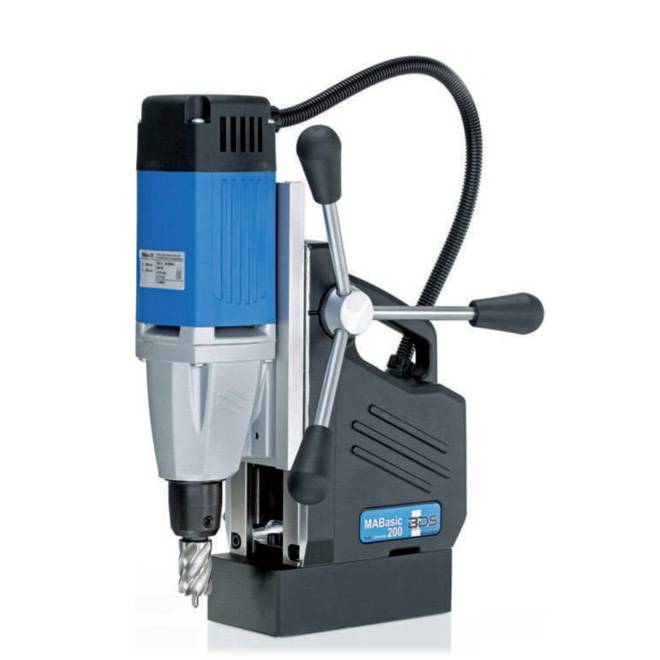
This article is the extended version of the use of the magnetic drill.
Professional drilling following the instructions below ensures flawless holes in less time and a longer service life for both the cutter and the magnetic drilling machine.
The article below gives information on the Use of the Magnetic Drill (Magnetic Drilling Machine), the Use of Annular Cutters, Professional Tips for a Longer Service Life of the Cutters and the Magnetic Drill, Useful Safety Instructions for the Use of the Magnetic Drill, Operating the Magnetic Drilling Machine, Instructions for Drilling Horizontally or at Height, Instructions Concerning the Material to Be Drilled, Cleaning the Magnetic Drilling Machine After Use and so on.
A. Choosing the magnetic drilling machine:
There is a wide variety of magnetic drilling machines on the market; choose the magnetic drilling machine or magnetic drill best suited to your purpose. The types of magnetic drilling machine are given in detail in the other article: Types of Magnetic Drilling Machine:
B. Choosing the cutters:
In general there are two kinds of cutter: High Speed Steel (HSS) cutters and Tungsten Carbide Tipped (TCT) cutters. We recommend HSS cutters for normal drilling work, because they are cheaper, can be resharpened, need fewer RPM — which reduces the load on the magnetic drilling machine — and extend the machine's service life.
Above 40 mm diameter, TCT cutters are cheaper and drill faster, so TCT cutters should be used only above 40 mm (1 9/16 inches).
TCT cutters should be used for drilling very hard materials such as stainless steel, HARDOX, INOX and so on. For normal metals that are not very hard, HSS cutters are the best option.
C. Instructions for the professional use of the magnetic drill and the cutters are given below:
- Choose the right cutter for the material to be drilled.
- Choose the right pilot pin for the length of the cutter.
- Place the pilot pin inside the cutter. Do not use the cutter without a pilot pin.
- Fit the cutter into the machine's spindle and tighten the screws correctly.
- Move the machine towards the mark where the hole is to be made and find the mark with the help of the pilot pin, placing the tip of the pilot pin on the mark.
- After positioning the machine on the mark where the hole is to be made, switch on the magnet switch of the magnetic drilling machine. Check that the magnet indicator lights GREEN. If the magnet indicator lights RED, it means the magnet does not have enough material underneath to adhere to. In ideal conditions the material to be drilled should be at least 8 mm (5/16 inch) thick.
- Fill the coolant tank with lubricant. Never operate the machine without lubricant. Use cutting oil for HSS cutters and a water-soluble coolant for TCT cutters.
- Set the correct RPM on the machine for the size of cutter used. The formula for calculating the RPM (n) is n = (v X 1000) / ( d X 3.14). In this formula v is the cutting speed of the cutter and d is the diameter of the cutter. You can also use our website to calculate the RPM automatically. Please click this link: https://www.bds-machines.com/rpm-calculator/
- Switch ON the coolant tank valve of the magnetic drill.
- You should use internal lubrication when drilling with cutters and external lubrication as well when drilling material more than 50 mm (1 15/16 inches) thick.
- Switch ON the motor switch of the magnetic drill and start drilling with a slow feed. Do not strike the material with the cutter.
- Drill at a steady feed rate. A feed that is too slow or too fast will damage the cutter.
- Check whether the oil is coming out. Use plenty of oil for good results.
- Too much pressure on the feed handle does not speed up drilling and will break the cutter.
- For the best results and a longer service life of the cutters, drill with little pressure and a steady feed.
- To prevent notches forming, you need to use reverse feed when making deep holes.
- To prevent accidents, clean the working area after drilling with the BDS PowerWORKERor suitable cleaning tools.
- Flawless drilling following the instructions above ensures flawless holes in less time and a longer service life for both the cutter and the machine.
D. Video on the use of the magnetic drill and the cutters:
E. Poster on the use of the magnetic drill and the cutters:
Please click on the poster to download it!
F. Important safety instructions for the magnetic drilling machine:
- Do not use the magnetic drilling machine (magnetic drill) in potentially flammable or explosive environments.
- People who cannot use the magnetic drilling machine (magnetic drill) safely because of physical, mental or motor abilities must use the machine only under the supervision and according to the instructions of a responsible person.
- People with a pacemaker or other medical implants must not use the magnetic drilling machine (magnetic drill).
- Children are forbidden to use the magnetic drilling machine (magnetic drill).
- Before use, check the magnetic drilling machine (magnetic drill) for visible damage. Do not operate a damaged magnetic drilling machine (magnetic drill).
- Before starting work, check the condition of the safety chain and the function of the switches on the magnetic drilling machine (magnetic drill).
- The connecting cable must be repaired only by a qualified electrician.
- The magnetic drilling machine (magnetic drill) must be repaired only by an authorised specialist workshop or the factory customer service.
- Repairs carried out by unauthorised persons present a serious danger to the user.
- During the warranty period the magnetic drilling machine (magnetic drill) must be repaired only by a customer service authorised by the manufacturer; otherwise the warranty is void.
- Damaged parts may be replaced only with genuine spare parts. Only with those parts can the safety requirements be met.
- Keep the magnetic drilling machine (magnetic drill) under constant observation while working.
- Store the magnetic drilling machine (magnetic drill) in a dry, warm place away from children.
- Do not keep the magnetic drilling machine (magnetic drill) outdoors and prevent it from being exposed to moisture.
- Make sure the working area is adequately lit (>300 Lux).
- Do not use a low-power magnetic drilling machine (magnetic drill) for heavy work.
- Keep the magnetic drilling machine (magnetic drill) clean, dry and free of oil and grease.
- Follow the instructions for lubricating and cooling the tool.
G. Danger of electric shock (current):
Contact with electrical cables or components can cause serious injury and even death!
Apply the following safety precautions to avoid dangers arising from electric current:
- Do not open the housing of the magnetic drilling machine (magnetic drill). Risk of electric shock from contact with electrical connections.
- Do not immerse the magnetic drilling machine (magnetic drill) or the mains plug in water or any other liquid.
- Use only extension cables or cable reels with a conductor cross-section of at least 1.5 mm².
- Use only extension cables approved for the place of use.
- Check the condition of the extension cable regularly and replace it if it is damaged.
- To reduce the risk of electric shock in the event of damage, avoid contact with earthed parts (e.g. pipes, radiators, steel beams).
- An RCD (residual current device) must be used when the magnetic drilling machine (magnetic drill) is used outdoors or in a damp environment.
H. Operating the magnetic drilling machine:
Improper use of the magnetic drilling machine (magnetic drill) increases the risk of injury!
Follow the safety instructions below so as not to harm yourself or others:
- Operate the magnetic drilling machine (magnetic drill) only with the protective equipment specified in these instructions.
- Do not use protective gloves while the magnetic drilling machine (magnetic drill) is running. A glove can be caught by the magnetic drilling machine (magnetic drill) and injure the hands. Danger of losing one or more fingers.
- Remove loose jewellery before starting work.
- If your hair is long, use a hair net.
- Always switch the magnetic drilling machine (magnetic drill) off before changing tools or carrying out maintenance or cleaning.
- Wait until the magnetic drilling machine (magnetic drill) has come to a complete standstill.
- To prevent the magnetic drilling machine (magnetic drill) from starting accidentally, always unplug it before changing tools, cleaning or carrying out maintenance.
- Do not put your hand inside the machine while it is running. Remove chips only when the magnetic drilling machine (magnetic drill) is at a standstill. Wear protective gloves when removing chips.
- When working on scaffolding the operator must use a safety harness, because the magnetic drilling machine (magnetic drill) can swing dangerously in the event of a power failure.
- Before every use, check that the electromagnets hold securely on the substrate.
- When working in an inclined or vertical position and at height, secure the magnetic drilling machine (magnetic drill) with the safety chain supplied. If the magnet comes loose or the power fails, the magnetic drilling machine (magnetic drill) can fall.
- Before use, check that the tool is securely fixed.
- Prevent connecting cables from hanging over edges (tripping effect).
I. Working in an inclined or vertical position (drilling horizontally or at height):
- When working in an inclined or vertical position and at height, the magnetic drilling machine (magnetic drill) must be secured using the safety chain supplied.
- Before every use, check that the safety chain works properly. A damaged safety chain must not be used. Replace a damaged safety chain immediately.
- Position the safety chain so that the magnetic drilling machine (magnetic drill) moves away from the operator in the event of a slip.
- Wrap the safety chain around the handle of the magnetic drilling machine (magnetic drill) as tightly as possible.
- Before starting work, check that the safety chain and the lock are securely fitted.
- Use protective equipment.
J. Checking the condition of the substrate (the material to be drilled):
- The magnet's adhesion force depends on the condition of the substrate. Adhesion force is reduced considerably by paint, zinc and coatings and by rust. To obtain sufficient magnet adhesion force the substrate must meet the following conditions:
- The substrate must be magnetic.
- The adhesion surface and the magnetic foot must be clean and free of oil.
- The adhesion surface must be completely smooth and flat.
- Clean the substrate and the magnetic foot of the magnetic drilling machine (magnetic drill) before use.
- Clean roughness and rust off the substrate.
The best adhesion effect is obtained on a low-carbon steel substrate at least 20 mm thick.
Thin steel: when drilling thin steel, an additional steel plate (minimum dimensions 100 x 200 x 20 mm) must be placed under the part to be drilled. Secure the steel plate to prevent it from falling.
NF (non-ferrous or anti-magnetic) metals or workpieces whose surface is not flat: when drilling NF metals or parts with an uneven surface, a special holding device must be used.
K. Cleaning the magnetic drill after use:
After every use
- Remove the fitted tool.
- Remove chip and coolant residues.
- Clean the tool and the tool holder on the magnetic drilling machine (magnetic drill).
- Clean the slide guide of the magnetic drilling machine (magnetic drill).
- Place the magnetic drilling machine (magnetic drill) and its accessories in the carrying case.