Hydroforming Presses
Features
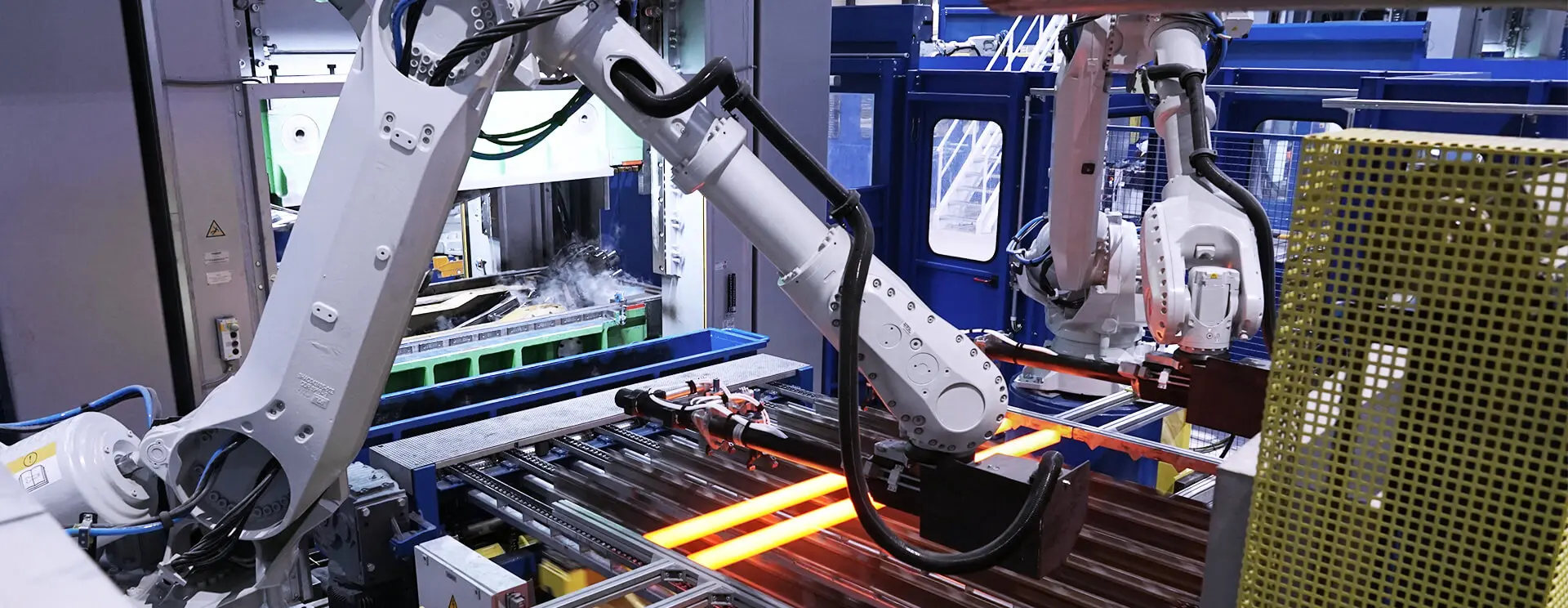
- Around 40 years of experience as one of the pioneering companies in hydroforming.
- Support from the first idea through prototyping to an individual production line.
- Prototyping carried out in Graebener®'s own Prototyping Center.
- Customized press concepts rather than catalogue machines.
Hydroforming Presses
Specifications / Models
Machine concepts
On the basis of the following machine concepts we find the optimum solution for you:

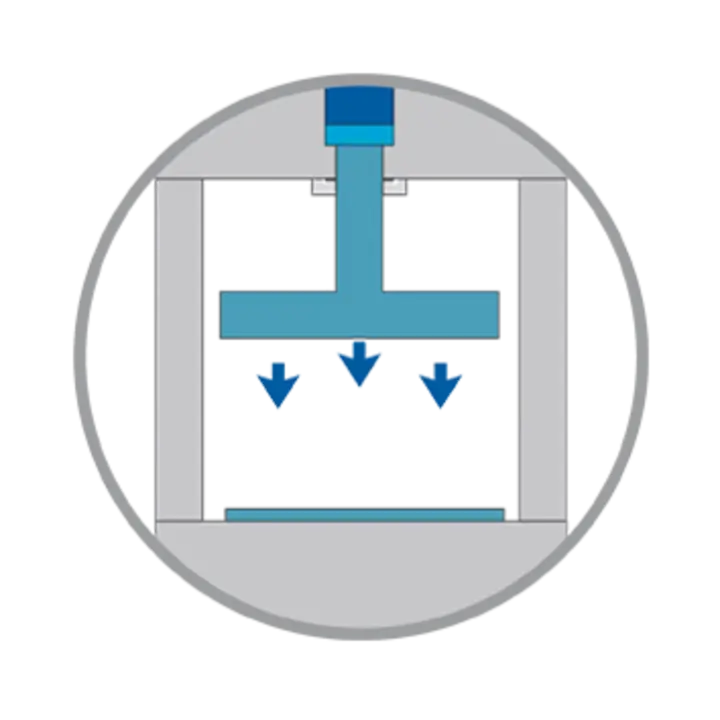
With a 4-column press, the upper and lower traverse are connected by means of pre-tensioned tie rods. This offers two main advantages: On the one hand, this allows for an optimized deflection compensation of the construction. On the other hand, machine operators can access the tool area of the press from all sides. This allows the application of hydroforming tools which, including the cylinders, are larger than the actual table surface.
4-column presses are used for a wide range of application. They are standardized for closing forces of 630, 800, 1,000, 1,200, 1,500, 1,700, 2,000, 2,500, 3,500 and 5,000 tons.
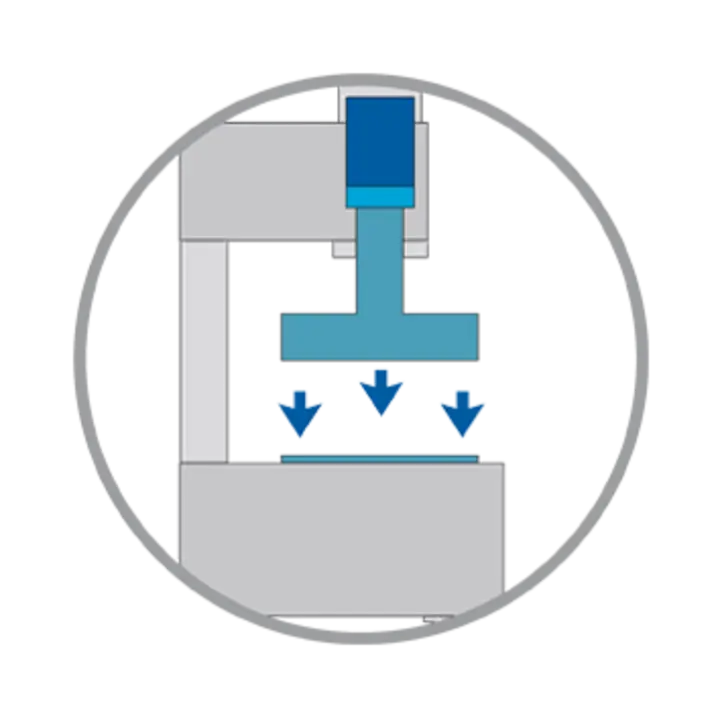
Thanks to extremely high closing force potentials, the C-frame press is especially suitable for the economic production of long components such as for example side rails or cross members, roof frames and other component groups. In 2002, we developed the Graebener RoboClamp®, the world's most powerful hydroforming press. This press provides easy access from three sides, tool change and loading are carried out by robots.
C- frame presses are standardized for closing forces of 3,250, 6,500, 13,000 and 18,000 t.
Frame presses are designed as rigid welded constructions. These compact presses are especially suitable for the low-pressure hydroforming and for smaller components, such as exhaust parts or fittings like tees and reducers.
An optimum forming process is also depending on a perfect interaction of operator and machine. For this purpose, the visualization system PressPro® has been developed. With the aid of PressPro®, the operator can develop, optimize and execute the forming process independently. The open and flexible system allows freely definable process steps for prototyping as well as for series production. Pre-defined sequences can be assigned to each tool, saved in the corresponding tool data base and accessed from there as well. Main advantage: The time between the tool set-up and the production of the first "good" part can be reduced significantly.
For an optimum control of the highly complex process sequence we have been working successfully with our partner Bosch Rexroth for many years. Based on the Motion Logic System Indra-Motion MLC, Rexroth has developed a completely new control and feedback control system which has been tested exclusively in our Prototyping Center and continuously refined later on from both partners. The entire control system for hydraulic, electric and hybrid drives builds on a compact controller-based hardware. Here the PLC merges with the motion controller to a new system.
Source: the manufacturer's product page
Product Description
Take advantage of hydroforming technology. From the initial idea, to prototyping at our own Graebener® Prototyping Centre and on to a production line tailored to you, we are at your side as a competent partner. Our roughly 40 years of experience and the fact that we are one of the pioneers of this innovative machine technology give you a decisive advantage.
Additional Documents
Datasheets
Industries this machine is used in
The industry page gathers that trade's machines, consumables and our references in one place.