A Sectoral Solution Guide: Choosing Equipment for Shipyards, Steel Construction and Energy
Every industry speaks its own language, works by its own rules and faces its own unique difficulties. The needs of a welder fighting salt water on a curved ship's hull in a shipyard are completely different from those of a steel erector working against the wind on the 30th floor of a skyscraper, or of a technician working with zero tolerance for error on a high-pressure natural gas pipeline. A "one machine fits all" solution is therefore an approach doomed to fail on serious industrial projects.
The right equipment must understand the material, the standards, the safety protocols and, most importantly, the time pressure of the sector it works in. At Habib Makina, working shoulder to shoulder with Turkey's leading shipyards, largest construction firms and strategic energy companies for 45 years, we have not merely sold machines; we have developed solutions tested in the field and proven for efficiency. We speak your language, we know your standards and we are aware how critical your delivery dates are. In this comprehensive guide we examine the most critical machines and technologies for the three most demanding sectors of Turkish industry: shipyards, steel construction and energy. Get ready to discover your sector's specific problems and the world-leading brands that solve them.
1. Shipyards and Shipbuilding: A Race Against Corrosion and Time
Shipbuilding and maintenance is one of engineering's most demanding arenas. Here machines do not merely work metal; they also fight the merciless corrosion of salt water, the weight of huge, thick plates and the complex geometry of a ship's hull.
The unique difficulties of shipyards
The basic difficulties in a shipyard are: working steel plates of huge size and great thickness (often over 50 mm), those plates usually being curved, the necessity of working in narrow, enclosed spaces, and the obligation to meet the extremely strict quality and safety standards of international classification societies such as Lloyd's and DNV.
Habib Makina's strategic equipment triangle for shipyards
Overcoming these difficulties requires excellence in three key areas:
A. Surface preparation and bevelling: GBC, Graebener, Beveltools
The most critical factor determining a ship's life is the quality of its welds. A poor weld is a weak link where corrosion will begin years later. Methods that create heat and give a non-standard surface quality, such as manual grinding, are therefore unacceptable in shipyards.
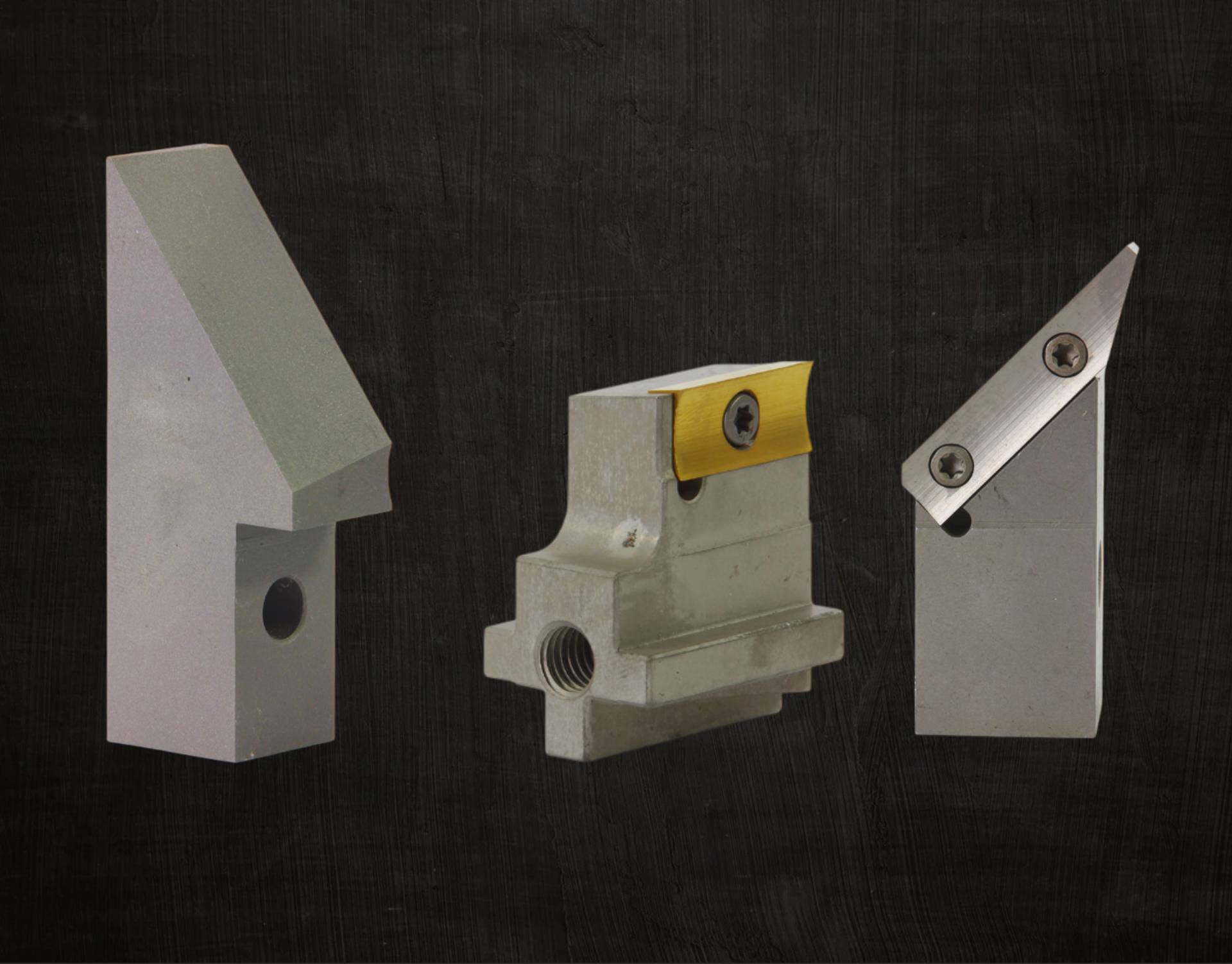
- Heavy-duty plate chamfering: GBC For bevelling the edges of the huge steel plates that form a ship's hull quickly, precisely and in series, GBC's heavy-duty plate chamfering machines are the industry standard. Because they work without heat they do not disturb the material's structure and preserve its corrosion resistance.
- Weld root removal: Graebener When ship blocks are joined, the root of the first pass has to be cleaned (root removal) so that the back pass can be welded. Doing that manually is very difficult. The automated systems of Germany's Graebener do this work with incredible speed and precision and shorten the project's delivery time.
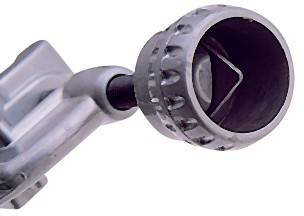
- Curved surfaces and manholes: Beveltools One of a shipyard's biggest headaches is bevelling the curved edges of a ship's hull or circular cut-outs such as manholes. The innovative, portable machines of the Dutch firm Beveltools do what standard machines cannot and turn this demanding job into a simple, fast operation.
B. Precise drilling and assembly: BDS magnetic drills
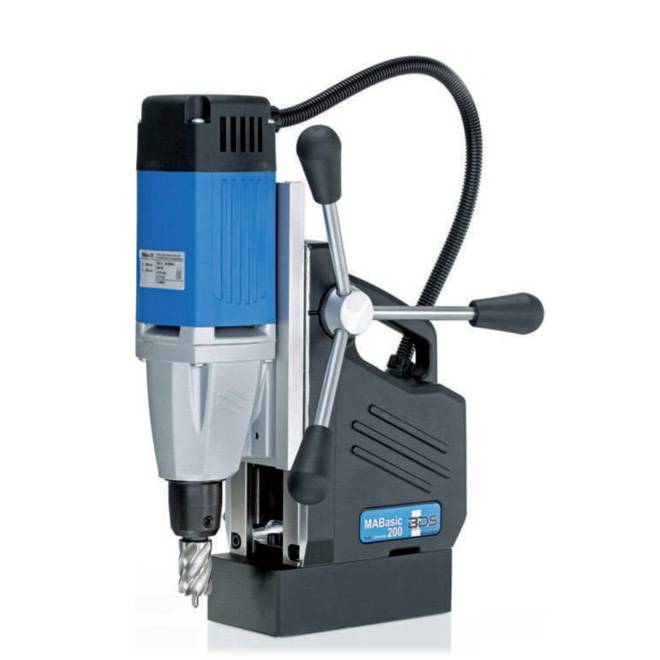
A ship is a structure held together by thousands of bolted connections. The precision of those holes is critical to the structure's integrity. Being portable, BDS magnetic drills let you carry the workshop into the narrowest compartments of the ship. Thanks to their powerful magnets they work safely in vertical, horizontal and even overhead positions and drill thick marine steel easily.
C. On-site repair and maintenance: ELSA portable boring
During a ship's periodic maintenance (dry-docking), one of the most costly operations is repairing worn rudder or propeller shaft bearings. Dismantling those huge parts takes weeks. ELSA portable boring machines, however, make it possible to carry out that repair without dismantling the part, directly on the ship, to workshop precision. That reduces a ship's time in dock from weeks to days and creates an incredible cost advantage.
2. Steel Construction: Height, Speed and Precision
Skyscrapers, bridges, stadiums, industrial plants… The steel construction sector builds the skeleton of the modern world. In this sector time is money, errors of a millimetre can waste tonnes of steel and, most importantly, working at height requires zero error and maximum safety.
Solutions for the steel construction workshop and site
An efficient steel construction project is possible with perfect fabrication in the workshop and fast assembly on site.
A. Fast, precise fabrication in the workshop
The fate of the project is determined while the steel profiles are still in the workshop. Speed and precision in the workshop guarantee trouble-free assembly on site.
- Drilling profiles: BDS magnetic drills For making holes in I-profiles, H-profiles and box sections in series and with precision, BDS's rail-mounted or bench-mounted magnetic drills are far more flexible and faster than standard pillar drills.
- Weld preparation: GBC plate chamfering Preparing the weld bevels of the end plates and flanges used in column-beam connections with GBC machines shortens welding time on site and improves quality.
- Curved forms: Mackma pipe bending On projects requiring curved forms such as roof trusses, architectural elements or handrails in particular, Mackma pipe bending machines offer attractive and sound solutions.
B. Flexibility and power on site
However flawless the fabrication in the workshop, a site always throws up the unexpected. In those moments, portable solutions that can take the workshop to the site are lifesavers.
- Assembly and revision holes: BDS portable magnetic drills If a connection hole does not line up or there is a last-minute change to the project, it is impossible to send a column weighing tonnes back to the workshop. BDS portable magnetic drills let you drill to workshop precision even 100 metres above the ground.
- Permanent marking: LACO Markal paint markers Every steel profile has to have its assembly code written on it. It is vitally important that this mark is not wiped away by rain, snow and sun. LACO Markal's permanent paint markers guarantee that this critical information stays readable throughout the project.
3. The Energy Sector (Pipelines and Power Plants): Zero Tolerance for Error
Oil, natural gas, electricity… The energy sector is the lifeblood of our civilisation, and the slightest leak or failure in those vessels can end in disaster. In this sector there is no such thing as "almost right". Everything has to be perfect. High pressure, flammable and explosive substances, demanding terrain and the strictest international inspection standards are the realities of this sector.
Critical equipment for pipeline and power plant projects
Equipment used in the energy sector must be not only efficient but also of documentable quality and of the highest level of safety.
A. Cutting and bevelling: the most critical stage
Every one of the thousands of welds in a pipeline has the potential to be the line's weakest link. The only way to remove that risk is a perfect preparation process.
- Spark-free cutting: Reed cold cutting machines Creating sparks while carrying out maintenance on a live oil or gas line is an invitation to disaster. Because the American firm Reed's "cold cutting" technology cuts without creating sparks or heat, it is the only safe and approved method for such risky environments.
- Precise weld bevels: GBC pipe end chamfering Pipeline welds are generally inspected by non-destructive testing (NDT) methods such as X-ray. To pass those inspections the weld must be fully penetrated. GBC's portable chamfering machines, clamping onto the pipe externally or internally (OD/ID mount), create perfect, standard-conforming weld bevels every time.
B. Flange maintenance and repair: no way through for leaks
The most common leak points in pipelines and power plants are flange connections. Flange faces that wear or are damaged over time cause leaks and pressure losses. ELSA's portable flange facing machines make flange faces mirror-smooth directly on site, without dismantling the pipeline, and remove the risk of leakage.
C. Safe, certified marking: LACO Markal
Stainless steel pipes used in nuclear or thermal power plants in particular are extremely sensitive to chloride corrosion. Marking made with a standard pen can become a starting point for corrosion years later. LACO Markal's certified "low chloride" markers are the only safe and approved option for these critical applications.
We Know Your Sector, We Offer Your Solution
As you can see, for Habib Makina selling machines does not mean picking a product from a catalogue. For us it means understanding the specific difficulties, standards and goals of your sector. Whether you are struggling with the curved steel of a ship's hull, the windy site of a skyscraper or the zero error tolerance of a pipeline, our portfolio holds a world-leading brand designed specially for you and 45 years of experience to help you use that brand most efficiently on your project.
Are you looking for field-proven solutions tailored to the difficulties of your own sector? Work with a team that understands your project, your standards and your goals.
Take advantage of our 45 years of experience today for an equipment and efficiency analysis specific to your sector. Let us offer you not just a machine but a competitive advantage.