What Is Bevelling (Chamfering)? The Scientific Basis of a Perfect Weld
Why can two thin metal sheets be brought end to end and joined easily, while doing the same on a thick-walled pipe or plate results in a weak, superficial joint that will eventually crack? The secret of the enormous difference between these two scenarios lies in one of the most fundamental yet most misunderstood processes in industrial manufacturing: bevelling, or, by its more common name, chamfering.
To many, chamfering may look like a simple operation consisting of grinding the pipe edges at a random angle before welding. But that perception is as far from reality as the difference between laying the foundation of a skyscraper and merely painting a coat over a surface. In reality chamfering is a precise engineering and metallurgical science that ensures the safety and integrity of high-pressure pipelines, huge steel structures and critical industrial equipment.
In this comprehensive guide we will remove the mystery from chamfering. We will look in full detail not only at "what it is" but also at why it is vitally important, how it directly affects the strength of a weld, what the different bevel geometries mean and why modern mechanical chamfering methods have an indisputable advantage over traditional methods. By the end of this article, when you look at a weld seam you will see not just a joint but the engineering marvel behind it.
Basic Physics: Why Does a Weld Need Full Penetration?
The basic aim of a weld is to join two or more metal parts at the molecular level, as if they had been manufactured as a single piece from the outset. In other words the aim is not to "glue" but to "unify".
In thin materials, the welding heat can easily penetrate the whole thickness of the material and create a complete fusion. As the wall thickness of the pipe or plate increases, however (generally beyond 3–4 mm), the welding heat applied from the surface cannot reach the lowest point of the material, the area called the "root". In that case only a superficial fusion occurs. Such a weld may look sound from outside, but it contains an unfused root area that behaves like a huge crack within it. Under the slightest pressure, vibration or stress, that weak point will inevitably tear.
This is where the concept of the "full penetration weld" comes in. It means that the weld metal has melted and fused fully through the entire wall thickness of the parts being joined. And the only way to achieve full penetration is to open a path for the filler metal to reach the root area.
What Exactly Is Bevelling (Chamfering)?
Definition: Bevelling (chamfering) is the operation of giving the edges of the metal parts to be welded a geometric shape at a particular angle or profile before they are joined.
The primary and most basic aim of this operation is to create a channel (groove) such as a "V", "X" or "J" between the two parts when they are brought together. That channel lets the welder or the welding robot deposit the filler metal layer by layer (pass by pass) and fill the entire wall thickness completely, from the deepest root point to the top surface. In this way the two parts become one indistinguishable whole.
A Glossary of Bevel Geometries: What Do V, X, J and U Bevels Mean?
Not all bevels are the same. Different geometries are used according to the requirements of the project, the material thickness and the welding process. The most common are:
1. V bevel: the most common and basic geometry
The most frequently used bevel type. Generally an angle of 25° to 37.5° is given to the edge of each part, so that when the two parts are joined a total "V" of 50°–75° is formed. It is the standard for general-purpose pipe and steel construction work. It is relatively easy to apply.
2. X bevel (double V): the solution for thick materials
On very thick materials (generally over 20 mm), cutting a V bevel from one side only requires far too much weld metal. With an X bevel, a V is cut on both sides of the material, forming a symmetrical "X" profile. That has two great advantages:
- Less weld metal: The total volume to be filled is about 40–50% less than with a single V bevel. That saves a great deal of filler wire and gas.
- Balanced heat input: Welding alternately from both sides prevents the material overheating and distorting (warping) from one side only.
3. J bevel and U bevel: high-performance alternatives
In these bevel types the edges are machined to a curved profile like the letter "J" or "U" rather than a straight angle. The advantage of these geometries is that they have a far narrower top opening than a V bevel of the same wall thickness. That means the volume to be filled is smaller still. They are preferred especially in automatic and robotic welding, to increase welding speed and efficiency. Creating these complex profiles is impossible by manual methods, however, and requires precision machines.
Critical parameters: the root face and the root gap
The bevel geometry has two further inseparable parts. The root face is the small flat section left at the very bottom of the bevel, which prevents the metal melting and running during welding. The root gap is the space left between the two pipes and is vitally important for the full penetration of the first, root pass.
Chamfering Methods: From Traditional to Modern, Advantages and Risks
The methods used to create these precise geometries directly determine the quality of the result.
Method 1: Manual grinding — common but risky and inefficient
Advantages: Low initial investment cost (only an angle grinder is needed).
Disadvantages: Entirely dependent on the operator's skill. Consistency of the angles and the root face is almost impossible. It creates a heat-affected zone (HAZ) that overheats the metal and disturbs its metallurgical structure. It is extremely unsafe and unhealthy because of intense sparks, noise and dust.
Method 2: Thermal cutting (plasma / oxy-acetylene) — fast but rough and dirty
Advantages: Can produce a rough bevel quickly, especially on thick plate.
Disadvantages: This method creates the largest heat-affected zone (HAZ). It leaves a hard layer of dross (oxide) on the cut surface that must be cleaned off before welding. Obtaining a precise, smooth surface is impossible.
Method 3: Mechanical chamfering (cold working) — the professional standard
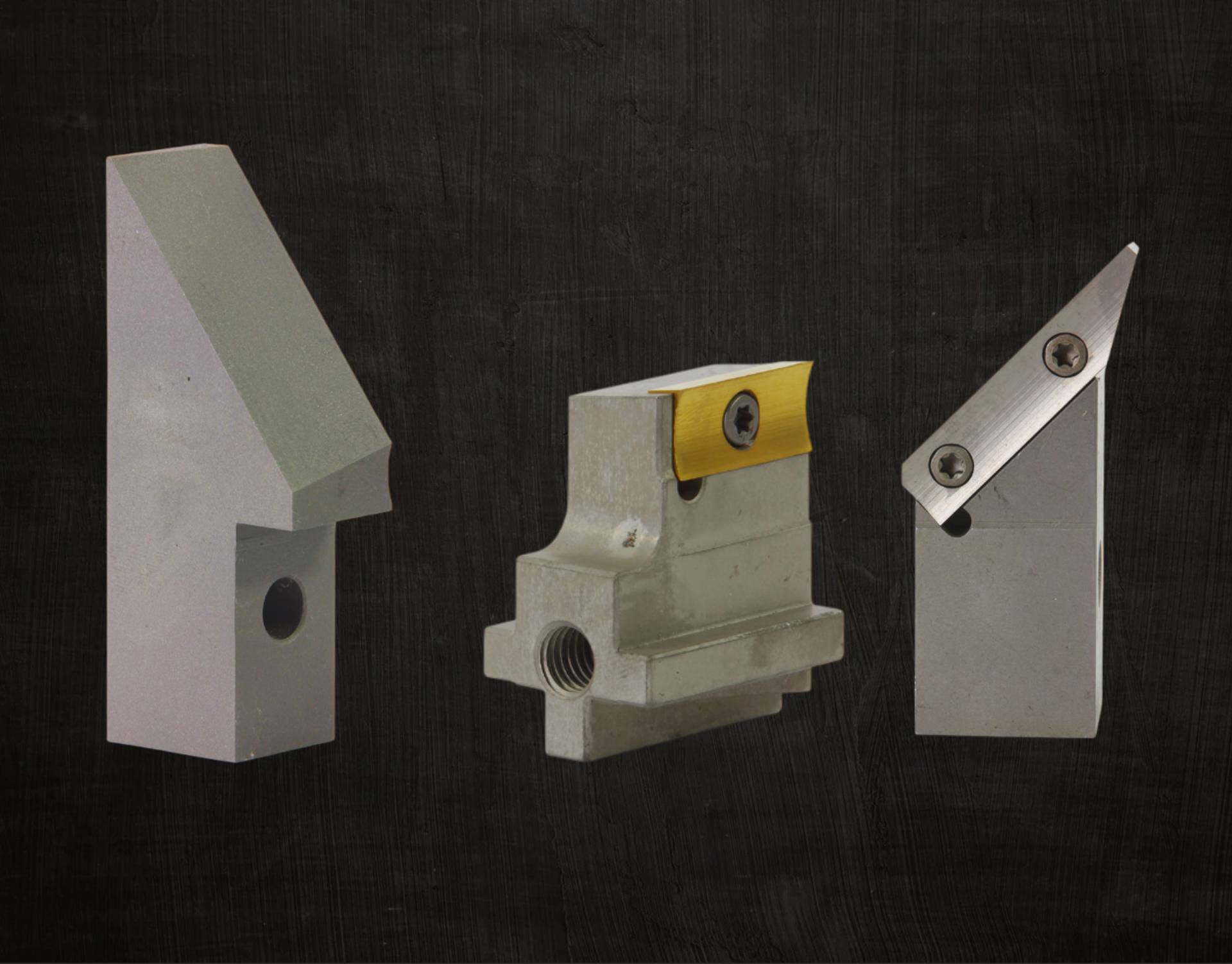
In this method a machine with special cutting inserts works the metal by removing chips, like a lathe, without heating it.
- Advantages:
- Zero heat, zero damage: It creates no heat-affected zone (HAZ). The metal's original strength and corrosion resistance are preserved 100% right up to the point to be welded.
- Mathematical precision: Every time, it creates a smooth, consistent bevel surface at exactly the angle the project requires.
- Clean and safe: It creates no sparks, fumes or hazardous dust. The cut surface is mirror-smooth and ready to weld directly.
- Repeatability: There is no difference between the bevel cut on the first pipe and the one cut on the thousandth. That is vitally important for standardised production (WPS).
GBC Chamfering Machines: Bringing Engineering Precision to the Field
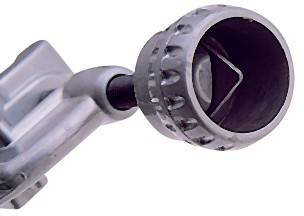
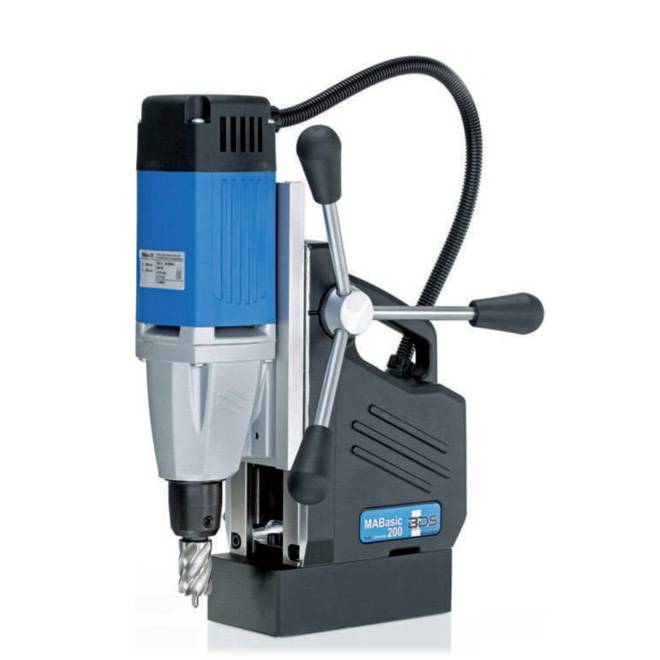
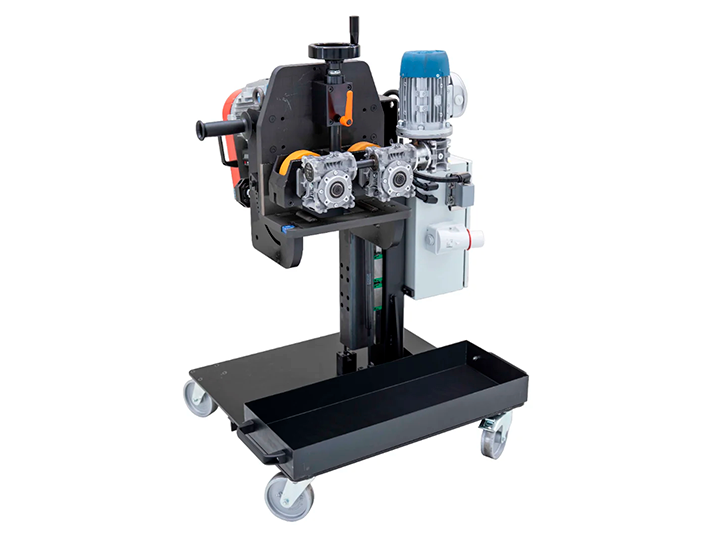
GBC pipe chamfering machines combine all the advantages of mechanical chamfering with portable, user-friendly designs suited to the demanding conditions of a site. When you use a GBC machine you do not merely shape the edge of a pipe; you actually guarantee the safety and long life of that joint.
- Repeatable perfection: Every bevel cut with a GBC matches your welding procedure specifications (WPS) exactly, which simplifies quality control and reduces the rejection rate to zero.
- Metallurgical integrity: Thanks to the "cold working" method, it preserves the critical properties of heat-sensitive materials such as stainless steel, duplex and other exotic alloys.
- Efficiency and speed: A job an operator does in an hour with a grinder, and with doubts, a GBC machine completes flawlessly in a few minutes.
- Flexibility: GBC machines do not only chamfer; they can also face the pipe end, counterbore the inner diameter and even cut complex profiles such as a J bevel.
Conclusion: Chamfering Is Not a Detail — It Is the Project Itself
As you can now see, bevelling is not a simple preparation step but a fundamental engineering process that determines the structural integrity and safety of a welded joint. In a critical application such as a pressure vessel, a steam pipeline or a load-bearing steel column, a weld failing can end in disaster. And the origin of that failure almost always lies in faulty or incomplete weld preparation.
A professional approach that does not compromise on quality, safety or efficiency requires abandoning traditional, skill-dependent and risky methods and adopting modern mechanical chamfering technology, which is repeatable, precise and safe.
On your next project, give weld preparation the importance it deserves so that your welds are not a superficial join but a real, fully penetrated unification. Get in touch with our expert team for more information about the GBC chamfering solutions that will put your weld quality on a scientific footing, and to determine the machine best suited to your project.