The Most Searched Questions and Answers About Pipe Cutting and Bevelling in Turkey: Cold Pipe Cutting and Pipe Bevelling Machines and a Guide to the Best Brands and Distributors
Pipe cutting and bevelling are fundamental operations in various industries, including oil and gas, construction and manufacturing.
In Turkey there are many questions about pipe cutting and bevelling, including questions about cold cutting and bevelling.
In this article we answer some of the most searched questions in Turkey about pipe cutting and bevelling, and about cold cutting and bevelling.
1. What are pipe cutting and bevelling?
Pipe cutting and bevelling are the operations used to prepare pipes for welding. Pipe cutting involves cutting the pipe to the required length, while bevelling involves cutting the edges of the pipe to create a sloping surface. That sloping surface produces a better welded joint, which increases the quality and strength of the weld.
2. Why do pipe cutting and bevelling matter?
Pipe cutting and bevelling are fundamental operations in various industries, including oil and gas, construction and manufacturing. Proper pipe cutting and bevelling ensure that pipes are correctly prepared for welding, which increases the quality and strength of the weld. In addition, proper pipe cutting and bevelling ensure that pipes are cut to the correct length and dimension, which is necessary for the pipes to fit together accurately.
3. What are the different types of pipe cutting and bevelling machine?
Various pipe cutting and bevelling machines are available, including hand-held machines, manual machines and automatic machines. Hand-held machines are portable and are generally used for smaller pipes. Manual machines are operated by hand and suit larger pipes. Automatic machines are computer controlled and suit larger pipes and high-volume production.
4. What are cold cutting and bevelling?
Cold cutting and bevelling is a process used to cut and bevel pipes without generating heat. It is generally used for pipes containing hazardous substances or pipes that cannot be heated because of the risk of damage. Cold cutting and bevelling machines use high-pressure water jets or abrasive materials to cut and bevel pipes.
5. What are the advantages of cold cutting and bevelling?
The advantages of cold cutting and bevelling include improved safety, reduced environmental impact and improved quality. Cold cutting and bevelling machines generate no heat, which reduces the risk of fire and explosion. Cold cutting and bevelling machines also produce no smoke or fumes, which reduces environmental impact. Finally, cold cutting and bevelling machines produce clean, precise cuts that improve weld quality.
6. What are the best brands of pipe cutting and bevelling machine?
Pipe cutting and bevelling machines are available in Turkey from various brands, including TAG, DWT and GBC. Each brand has its strengths and weaknesses, and the choice of brand depends on your specific needs and your budget. GBC, however, is widely regarded as one of the best brands of pipe cutting and bevelling machine for its precision, efficiency and durability. Habib Makina is also the best distributor of GBC products in Turkey, offering high-quality products at competitive prices and excellent customer service.
CONCLUSION
In conclusion, pipe cutting and bevelling are fundamental operations in various industries, and choosing the right type of machine and the right brand can make a great difference. Cold cutting and bevelling offer many advantages over traditional cutting and bevelling methods, including improved safety, reduced environmental impact and improved quality.
When considering the purchase of a pipe cutting and bevelling machine, it is important to consider your specific needs and your budget, as well as where the products are manufactured and partnering with a reputable distributor such as Habib Makina, to be sure you are getting the highest-quality products and services.
What is pipe bevelling? How is a pipe bevelled?
A pipe bevel is the angle formed between the end and the edge of a pipe. When a pipe end is formed at a specific angle, it is called a bevelled end. Pipe bevelling is the most important step in preparing a pipe joint for welding. The quality of the bevelled pipe directly affects the quality of the weld. Besides welding, a pipe may also be bevelled to deburr cut pipe ends for aesthetic and safety reasons.
Bevelling and chamfering: what is the difference?
Pipe chamfering is technically a type of pipe bevelling. Both terms refer to the edge between two faces of a pipe. The main difference between the two terms, however, is that a chamfer is an edge joining the two faces at an angle of 45 degrees, whereas a bevel can be at any angle other than 45 or 90 degrees.
How is a pipe bevelled?
There are several ways to bevel a pipe: using portable or stationary bevelling machines, a hand grinder, or a plasma or torch cutter.
Chamfering by hand is the cheapest and the most dangerous method compared with using a bevelling machine. It takes time and requires a skilled operator to produce the bevel with a hand grinder. What is more, the process creates a great deal of mess, while keeping the bevel quality the same for every pipe is almost impossible.
Using a torch or plasma cutter is another way of bevelling a pipe. Compared with a hand grinder it gives a faster result, but it also has some disadvantages. The flat land at the pipe end has to be prepared by hand, which is not a safe operation. Again, the bevels produced will be inconsistent. This method also cannot be used on all pipe materials, which greatly restricts flexibility in production.
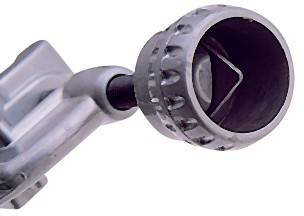
A portable bevelling machine comes in different configurations and is safer than the two previous methods. The greatest advantage of these portable machines is that they can save time, because the user can take the machine to the pipe. They suit maintenance work or use on site. They are, however, inadequate for meeting high production requirements.
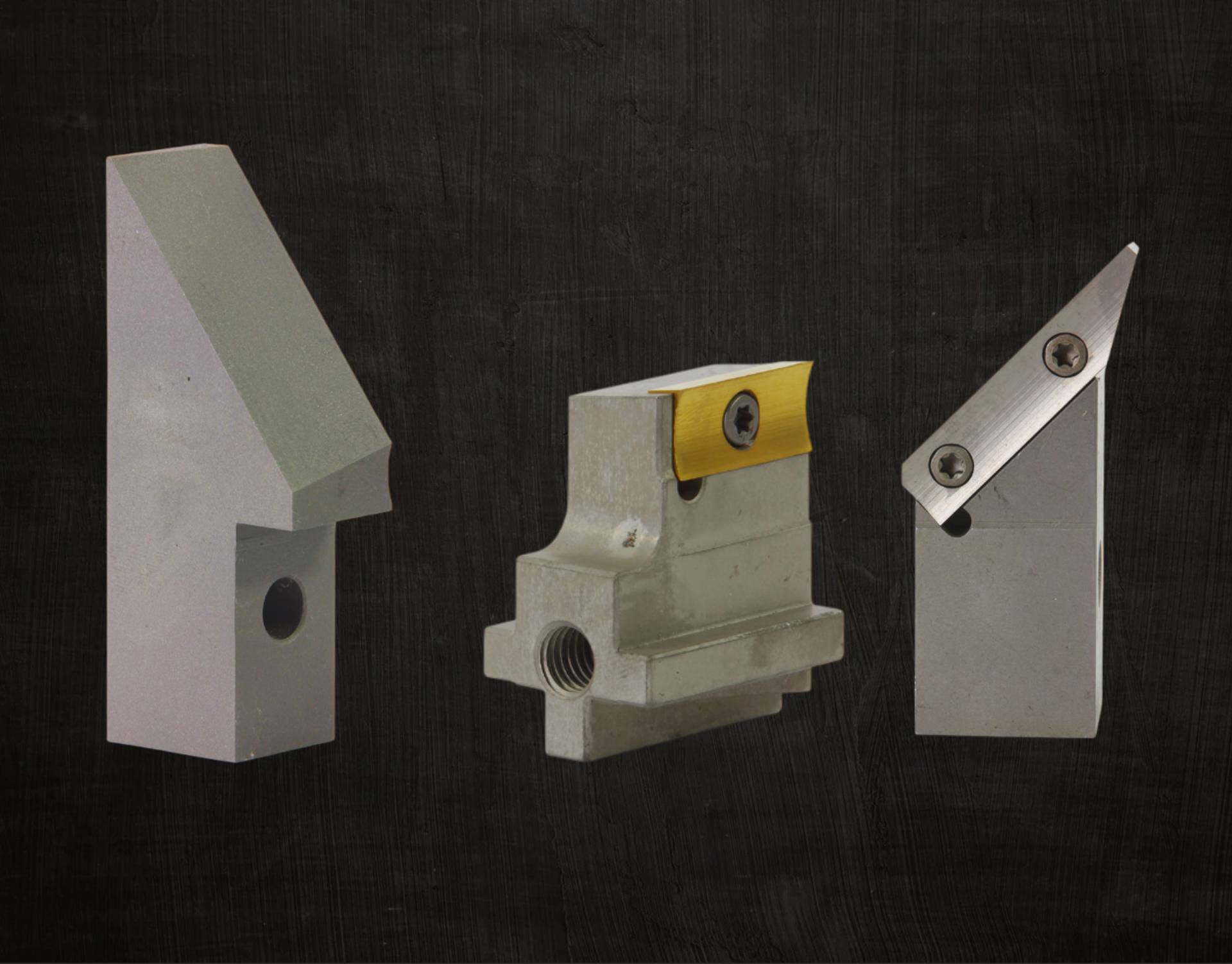
Stationary bevelling machines provide the most options and the most flexibility for pipe bevelling. With different tooling combinations, almost any kind of bevel shape can be created. They are designed to meet high production requirements in a safe working environment. They are also easy to integrate into automatic production lines, so the operator does not have to be at the machine at all times. Stationary bevelling machines have several advantages: standard carbide cutting inserts are cheap to replace when needed, they are easy to set up and need little maintenance, they give the lowest cost and the fastest cycle time per bevel, they guarantee a safe working environment, they offer a wide range of machining options, they can work multiple pipe materials and they do not require a specialist operator.
The disadvantages of the bevelling methods
| Hand grinding | Torch or plasma cutter | Portable bevelling machine | Stationary bevelling machine |
| Potential safety hazard | Fire hazard | Possible electrical cable hazard | Not suitable for on-site machining |
| Fire hazard | Requires touch-up | Possible guarding issues | Relatively high investment cost |
| Creates a great deal of mess and dust | Creates a great deal of mess and dust | Needs a dedicated container for chips | |
| Takes time | Cannot work all pipe materials | Expensive dedicated ground equipment | |
| Inconsistent bevel quality | Requires oxygen or dry compressed air | Takes time | |
| Expensive grinding wheels | Cannot produce J bevels or special shapes | ||
| Cannot produce J bevels or special shapes |
How do you choose the right bevelling method?
Several factors need to be considered before choosing the right method for a pipe bevel. The following questions will make that decision easier for you:
- Is it possible to bring the tube or pipe to the machine?
- Is portability / mobility of the machine a requirement?
- What are the characteristics and the required quality of the bevel?
- How much time is available per pipe or per bevel?
- What is the level of the machine operator?
Safety always comes first. Whatever the requirements, assessing all potential safety hazards on site is the first step in deciding on the right method.
CONCLUSION
In conclusion, pipe cutting and bevelling are fundamental operations in various industries, and choosing the right type of machine and the right brand can make a great difference. Cold cutting and bevelling offer many advantages over traditional cutting and bevelling methods, including improved safety, reduced environmental impact and improved quality.
When considering the purchase of a pipe cutting and bevelling machine, it is important to consider your specific needs and your budget, as well as where the products are manufactured and partnering with a reputable distributor such as Habib Makina, to be sure you are getting the highest-quality products and services